
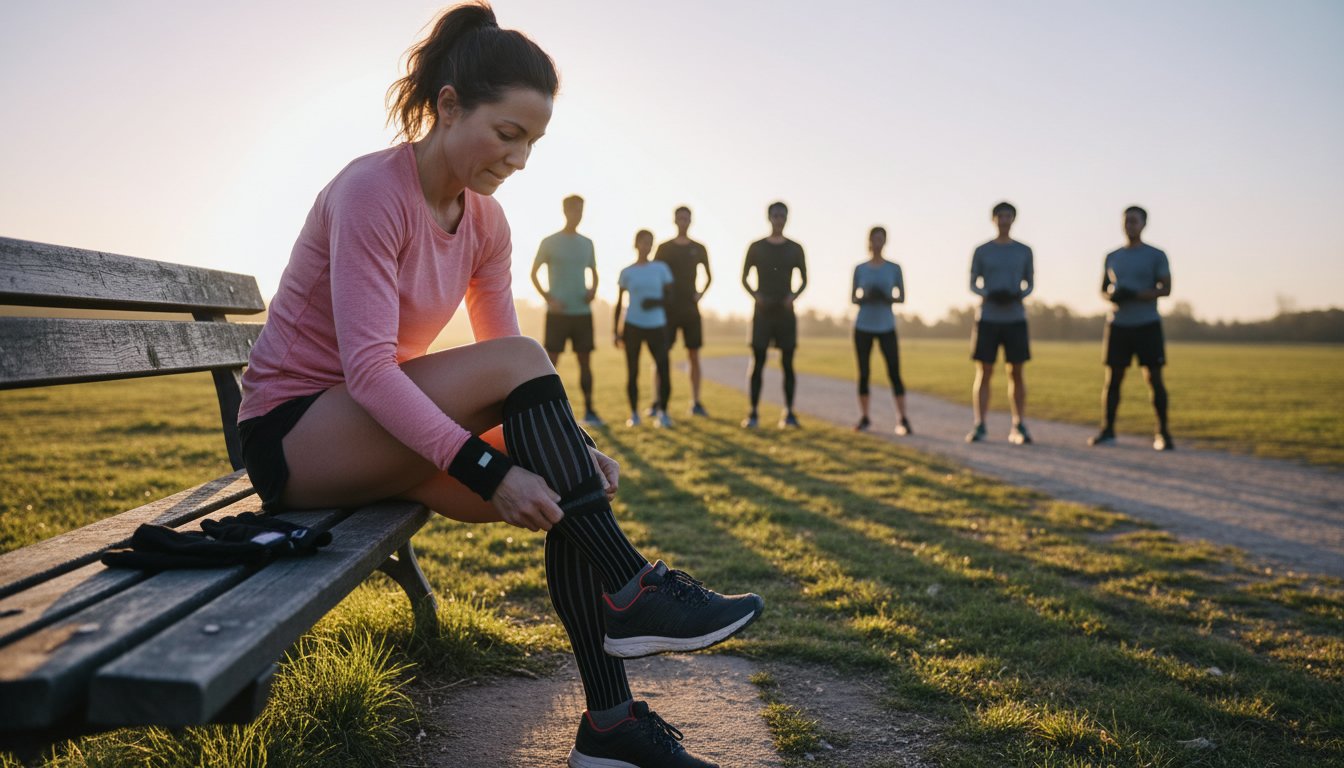
Athletes wear compression socks to improve circulation, reduce muscle vibration and swelling, and speed recovery after hard training or events. If you’ve seen runners, cyclists or team-sport players in knee-high tight socks, there’s a mix of biomechanics and comfort behind the look, not just fashion. This guide explains why do athletes wear compression socks, when they help, and how to choose and use them right.
Check with a doctor before starting a new training plan or using compression for a medical issue.
Quick Answer: Compression socks apply graduated pressure from ankle to calf to support venous return, reduce swelling and limit muscle oscillation. They can help short-term performance for some athletes and are most consistently helpful for post-exercise recovery, long travel and anyone prone to leg swelling.
Key Takeaways
- Compression socks improve blood flow by applying firmest pressure at the ankle and less toward the knee.
- They can reduce perceived soreness and swelling after exercise and help on long flights or long events.
- They are not a magic performance booster; benefits vary by activity, garment quality and fit.
- Use for 1–72 hours after hard sessions depending on goals; see a clinician if you have circulatory problems.
In This Guide
How Do Compression Socks Work?
Compression socks use graduated compression: tightest at the ankle and gradually less toward the calf. That gradient supports venous return, the process that helps blood flow back to the heart, and reduces blood pooling in the lower leg during and after activity.
The socks also limit muscle oscillation, which is the tiny, rapid movement of muscle fibers during impact. Less oscillation means less microtrauma and potentially less delayed onset muscle soreness (DOMS) after running or jumping sports.
Picture this: you finish a 10 km (6.2 mile) race, your calves feel heavy and your shoes are muddy. Sliding on compression socks for the next few hours can lower the feeling of heaviness and reduce visible swelling compared with no compression.
Who Benefits Most From Compression Socks?
Not every athlete gets the same advantage. Compression socks are most useful for:
- Endurance athletes (distance runners, cyclists) who face prolonged lower-leg loading.
- Athletes traveling long distances (air travel) who want to reduce swelling and clot risk on long flights of 4+ hours.
- People with jobs or sports that involve long standing or sitting periods.
- Those focused on faster recovery between back-to-back sessions or event days.
Say you play two soccer matches in a weekend. Wearing compression socks after the first match can help your legs feel fresher for the second match.
Do Compression Socks Improve Performance?
Short answer: sometimes, but don’t expect dramatic gains. Studies show small improvements in time-to-exhaustion or perceived exertion in some settings, but results are mixed and depend on sport, compression level and athlete.
Compression may help sprint recovery or repeat-effort sports by reducing muscle soreness between efforts. For single, short maximal efforts the impact is usually negligible.
How And When Should You Wear Compression Socks?
There are several practical uses and timing options depending on your goal.
- During long workouts or events: wear for long-distance runs or cycling sessions lasting over 60 minutes if you find they reduce fatigue.
- Post-exercise recovery: wear immediately after intense sessions for 1–24 hours to reduce swelling and soreness; some people wear them overnight for up to 72 hours after a very heavy block.
- Travel: wear on flights over 4 hours to lower swelling and reduce discomfort.
- Everyday support: use during long standing shifts or when you expect prolonged sitting.
Picture this: you have an 8-hour international flight before a half-marathon. Wearing compression during the flight and immediately after arrival can limit calf swelling and help you feel better for the race.
Common Mistakes To Avoid
Compression helps when used correctly. Avoid these common mistakes:
- Buying the wrong size. Too tight is uncomfortable and can impair circulation; too loose offers no benefit.
- Using medical-grade compression without medical advice if you have circulatory disease, diabetes or nerve damage.
- Expecting dramatic performance increases; benefits are usually modest and most consistent for recovery.
- Wearing damaged or old socks that have lost elasticity.
- Choosing compression that stops mid-shin when you need calf coverage for running or recovery.
When To See A Doctor
- If you have significant leg pain, numbness, skin colour changes, or non-healing wounds.
- If you have a history of deep vein thrombosis (DVT) or circulatory disease before using compression garments.
- If compression causes tingling, increased pain or skin damage.
How To Choose The Right Compression Socks
Choosing correctly means checking fit, compression level and material. Use these steps:
- Measure your ankle and calf circumference and leg length while standing. Sizes differ by brand.
- Pick compression in mmHg. For athletes, 15–20 mmHg offers light support; 20–30 mmHg is moderate and common for recovery; 30–40 mmHg is high and usually medical, get clinical advice before choosing that level.
- Choose breathable, moisture-wicking fabric for long workouts. Look for reinforced toes and heels for durability.
- Replace every 3–6 months with regular use or once elasticity feels reduced.
Say you’re a recreational runner trying compression for the first time. Start with 15–20 mmHg, wear them after runs for a week, and note any change in soreness or swelling before upgrading.
| Feature | Light (15–20 mmHg) | Moderate (20–30 mmHg) | High (30–40 mmHg) |
|---|---|---|---|
| Best For | Everyday support, long runs | Post-exercise recovery, travel | Medical needs, prescribed use |
| Comfort | High | Medium | Lower |
| Typical Use Time | During activity or travel | 1–24 hours post-exercise | As prescribed |
Frequently Asked Questions
Do compression socks prevent leg cramps?
They can reduce the risk of cramps for some athletes by improving circulation and reducing muscle fatigue, but they are not a guaranteed prevention method. Stay hydrated and manage electrolytes for better cramps control.
Can I wear compression socks while running?
Yes. Many runners wear them during runs longer than 60 minutes or when recovering between hard sessions. Test them during training before using them in a race.
How long should I wear them after a race?
Wearing compression socks for 1–24 hours after a race is common; some athletes keep them on overnight for up to 72 hours after very heavy efforts. Try shorter periods first and increase depending on comfort and recovery benefit.
Are compression socks the same as compression sleeves?
No. Socks cover the foot and calf, which can help with circulation and swelling at the ankle. Sleeves cover only the calf and may be preferable if you don’t want foot coverage or need less compression.
Will compression socks stop swelling on long flights?
They can significantly reduce swelling for many people on flights of 4 hours or more, and they are recommended for those at higher risk of leg swelling. For medical clot prevention, check advice from your healthcare provider.
Can anyone use compression socks?
Most healthy athletes can use them safely, but people with peripheral arterial disease, severe diabetes or certain nerve disorders should get medical advice first. If compression causes numbness or colour change, remove them and seek help.
Ready To Give Them A Try?
Compression socks are a simple, low-risk tool that can help reduce soreness, control swelling and aid recovery for many athletes. Try a moderate 20–30 mmHg sock after a heavy session for a week and track changes in swelling and soreness to decide if they belong in your kit.
This article is for general information only.