
A sudden rise in your electric bill usually happens because of increased usage, a failing appliance, a meter or billing error, or a tariff change, here’s how to find which one applies to you and what to do next. If your bill jumped overnight, keep reading for practical checks, numbers to look for, and easy fixes to help bring it back under control.
Quick Answer: Most sudden increases come from higher use (heating, cooling, guests), an inefficient or broken appliance, a change to your electricity rate, or a billing/metering mistake. Check your meter, compare usage on past bills, inspect big appliances, and contact your supplier if numbers don’t add up.
Key Takeaways
- Start by comparing kilowatt-hour (kWh) usage across the last 3 months and the same month last year.
- Major causes include heating/cooling, hot water, a failing appliance, or a rate/billing change.
- Inspect the meter, test suspect appliances, and call your energy supplier within 30 days if you suspect an error.
In This Guide
Why Did My Electric Bill Suddenly Go Up?
A clear cause is often either higher consumption (you used more kilowatt-hours) or a change in the price you pay per kWh. Look at the kWh figure on the bill and the unit rate. If kWh is much higher than usual, focus on usage. If kWh is similar but the cost is higher, the tariff or standing charges likely changed.
Picture this: your bill doubles in winter because your heat pump ran an extra 4 hours per day for two cold weeks, small hourly increases add up fast. Or imagine a washing machine with a failing heating element that runs longer and draws extra power each cycle.
Could A Rate Change Or Billing Error Be The Culprit?
Yes. Suppliers sometimes change tariffs, standing charges, or meter charging bands. Check the bill for a “Tariff” or “Rate” line and the effective date. Many suppliers must notify customers, but notices can get missed.
Billing errors happen too: estimated reads, transcription mistakes, or wrong meter assignments can inflate bills. If your bill is based on an estimate, enter your actual meter reading and compare the recalculated amount.
- Look for phrases like “estimated reading” or “assumed consumption.”
- Check the meter number on the bill matches the one at your property.
- Contact the supplier within their complaint window, often 30 days is a practical target to get a quicker resolution.
Is An Appliance Or Hot Water System Causing It?
Large appliances and heating systems are the usual suspects. A faulty fridge, dryer, or water heater can pull extra power. Heat pumps, electric boilers, and storage heaters can spike bills in colder months.
Say you have an older refrigerator pulling 100–200 watts extra because the compressor keeps running; over 24 hours that’s 2.4–4.8 kWh, which becomes noticeable over a month.
Quick Appliance Checks
- Unplug one big appliance at a time for 24 hours and compare daily meter readings.
- Look for unusual sounds, warm panels, or cycles that run longer than normal.
- Consider a plug-in energy monitor (cost about $20–$60) to measure watts and kWh per appliance.
Did Weather Or Occupancy Change My Usage?
Weather and people matter. Colder or hotter weather increases heating or cooling use. More people, guests, or working from home adds hours on lights, computers and kettles.
Picture this: hosting family for a week means extra showers, dishes and laundry, each shower might add 2–9 kWh depending on your water heater, so multiple daily showers add quickly.
Common Mistakes To Avoid
These traps can make your bill look worse or delay fixes.
- Assuming an estimated bill is accurate without checking your meter.
- Ignoring small continuous draws like chargers, standby TVs, or aquarium heaters.
- Delaying supplier contact, early reporting helps with investigations and refunds.
- Replacing appliances without testing; sometimes a simple repair or thermostat tweak suffices.
- Not comparing the same billing periods (compare month-to-month and year-on-year).
How Do I Troubleshoot And Lower My Bill Step By Step
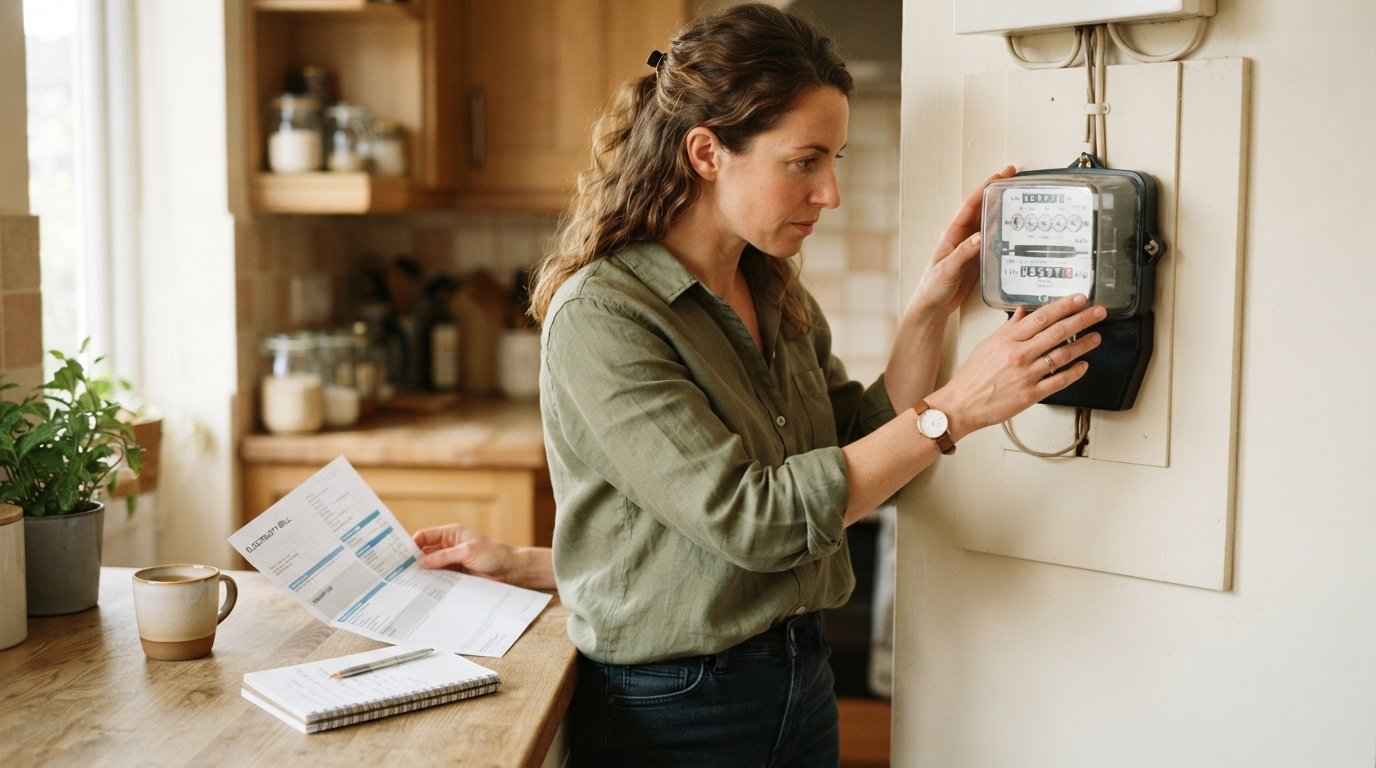
- Check Your Meter And Bill: Read your meter at the same time each day for 3 days and compare to the kWh on your bill. Note any “estimated” marks.
- Compare Usage: Look at the last 3 bills and the same month last year. If kWh is up by 10% or more, identify what changed.
- Inspect Big Loads: Test or unplug the fridge, water heater, washing machine and dryer one at a time for 24 hours to spot unusual consumption.
- Check Tariff And Charges: Verify your unit rate (pence or cents per kWh) and standing charge. Call your supplier if rates changed without notice.
- Make Simple Savings: Reduce thermostat by 1–2°C (2–4°F) for heating, wash at 30–40°C (86–104°F), air-dry where possible, and use LED bulbs.
- Escalate If Needed: If numbers still don’t add up, file a formal complaint with your supplier and ask for a meter test or audit. Keep copies of readings, photos, and correspondence.
| Cause | What To Check | Typical Monthly Impact |
|---|---|---|
| Heating Or Cooling | Thermostat settings, runtime, insulation | +50–300 kWh (varies by climate) |
| Faulty Appliance | Listen for constant cycles, test with monitor | +10–150 kWh |
| Hot Water | Boiler/immersion heater settings, shower time | +20–200 kWh |
| Billing Or Meter Error | Compare meter read and meter number on bill | Varies widely |
Frequently Asked Questions
Why Does My Bill Say Estimated Read Instead Of Actual?
Estimated reads happen if the supplier couldn’t access your smart or manual reading. An estimated bill can be higher or lower than your true use. Provide an actual meter reading to have the bill recalculated.
Can A Faulty Meter Cause High Bills?
Yes, though meter faults are rare. If you suspect a meter error, ask your supplier to test it and request details on how they’ll handle adjustments if the meter is found faulty.
How Quickly Should I Contact My Supplier About A Surprise Bill?
Contact them as soon as you notice an unusual increase, within 30 days is a useful target to speed investigations and potential refunds. Keep your readings and any photos handy.
Will Turning Down The Thermostat Make A Big Difference?
Yes. Reducing heating by 1–2°C (2–4°F) can cut energy use noticeably; on many systems this can lower consumption by around 5–10% over a billing period depending on insulation and outside temperature.
Is Smart Metering Always More Accurate?
Smart meters typically provide more frequent and accurate readings, reducing estimated bills. They don’t reduce usage by themselves, but the feedback can help you spot spikes sooner.
When Should I Replace An Old Appliance To Save Money?
Replace appliances when repair costs are high and the unit is over 10–15 years old, or when measured energy use is significantly above modern equivalents. Use the appliance’s kWh per cycle to estimate payback time against replacement cost.
Take Back Control Of Your Bill
Small checks, reading your meter, testing one appliance, and reviewing tariff lines, often reveal the cause of a sudden rise. Acting quickly gives you the best chance to correct mistakes and reduce ongoing costs.
This article is for general information only.