
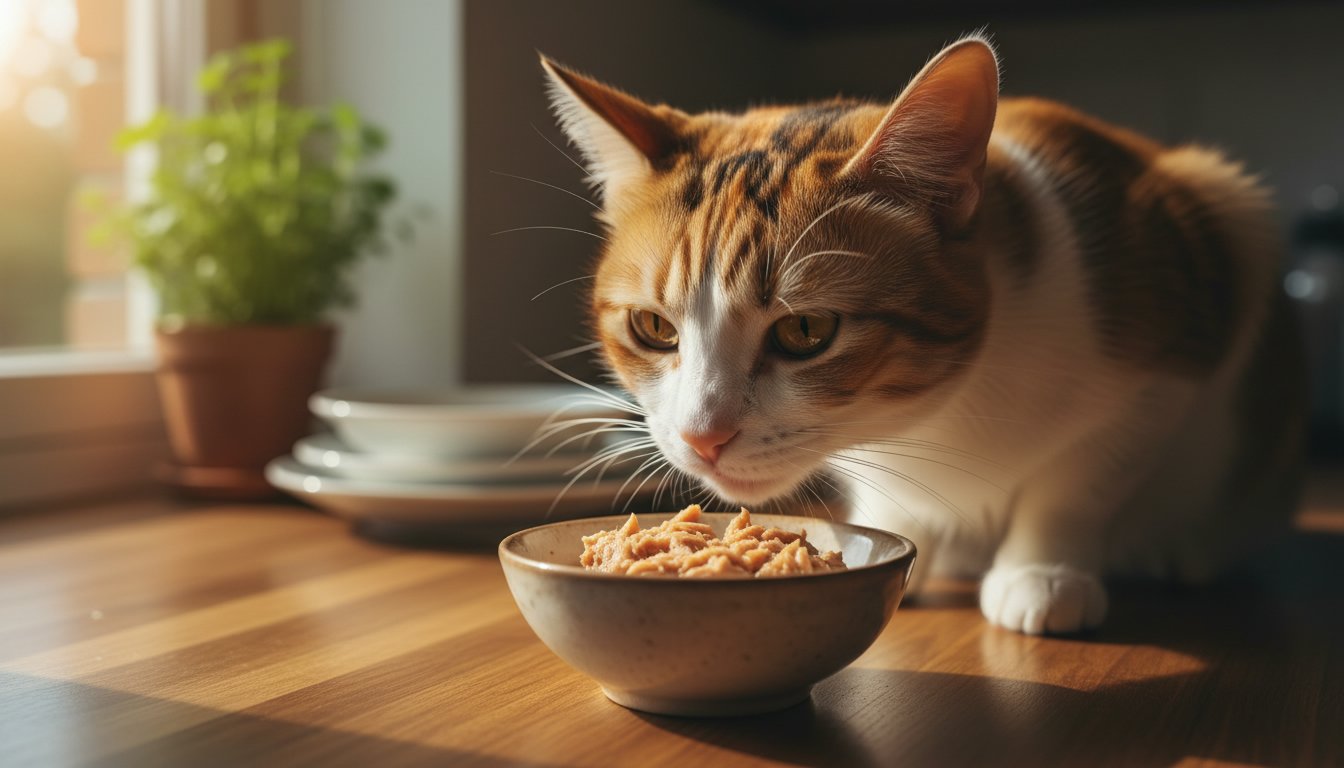
Yes, cats can eat tuna in small amounts, but it should not be their main food because of nutrition gaps, mercury risk, and food addiction. If your cat eyes your tuna can like a tiny pirate, this guide will help you offer tuna safely and know when to say no.
Always check with your veterinarian before making changes to your cat’s diet or if their behavior or appetite changes suddenly.
Quick Answer: Plain, cooked or water-packed tuna is safe as an occasional treat for most cats, but avoid canned tuna made for humans as a staple. Limit portions, avoid added salt or oil, and watch for signs of sensitivity or mercury exposure.
Key Takeaways
- Tuna is fine as an occasional treat, up to 1 tablespoon per 5 pounds of body weight, no more than 2-3 times per week.
- Never feed raw tuna regularly; prefer cooked, water-packed tuna without added salt or oil.
- Long-term tuna-only diets cause nutrient imbalances and mercury buildup; feed balanced cat food as main diet.
In This Guide
Is Tuna Safe For Cats?
Tuna is safe for most cats in moderation because it is high in protein and tasty. The problems come when tuna replaces a complete cat food or is given with oil, salt, or raw fish regularly.
Picture this: your tabby leaps on the counter and devours a chunk of tuna steak. One small taste won’t hurt, but repeated meals can lead to nutrient gaps and mercury exposure.
How Much Tuna Can Cats Eat?
Follow a simple rule: treats should be no more than 10 percent of your cat’s daily calories. For tuna, that usually equals about 1 tablespoon per 5 pounds of body weight, up to 2-3 times a week.
| Cat Size (lbs) | Serving Size | How Often |
|---|---|---|
| 4–8 lbs (small) | 1 teaspoon to 1 tablespoon | 1–2 times/week |
| 8–12 lbs (average) | 1–2 tablespoons | 2–3 times/week |
| 12+ lbs (large) | 2–3 tablespoons | 2–3 times/week |
How To Serve Tuna Safely
- Choose plain tuna, water-packed or cooked fresh tuna. Avoid oil-packed, smoked, or seasoned varieties.
- Remove bones and skin, and flake into small pieces for easy chewing. For kittens under 12 weeks, use 1/2 teaspoon per meal as an occasional treat.
- Mix a small amount with their regular canned or dry food to prevent them from refusing complete food later.
- Limit frequency to 2–3 times per week and stick to the servings in the table above.
- If you use fresh tuna, cook it through (bake or poach) to lower bacterial risk and reduce thiaminase enzymes in some raw fish.
Say your indoor cat sniffs tuna and then ignores her regular wet food. Try mixing 1 teaspoon of tuna into a full serving of balanced wet food to keep nutrition complete.
Signs To Watch For
- Diarrhea or vomiting within 24 hours of eating tuna
- Loss of appetite or lethargy after a tuna snack
- Excessive thirst or urination, which can be a sign of high sodium intake
- Weight loss or coat changes when tuna replaces balanced meals
- Neurological signs like tremors or weakness with long-term heavy tuna diets (possible mercury or thiamine deficiency)
When To Call Your Vet Right Away
- Repeated vomiting or diarrhea lasting more than 24 hours
- Severe weakness, collapse, seizures, or trouble breathing
- Inability to eat for more than 24 hours or signs of dehydration (sunken eyes, dry gums)
Why You Shouldn’t Feed Tuna Every Day
Tuna lacks certain nutrients cats need, like vitamin E and sufficient taurine when fed as the main diet. Regular human canned tuna also often has high sodium and may contain mercury depending on species and source.
Picture this: a cat owner thinks tuna is cheaper than cat food and switches completely. After a few months, the cat develops poor coat and low energy because essential nutrients were missing. Balanced commercial cat foods are formulated to prevent this.
For more about feeding treats safely, you might find related tips in our dog treat guides like Can Dogs Eat Bananas? Safe Ways to Share This Sweet Treat and general hydration and fruit advice in Can Dogs Eat Watermelon? Safe Serving Tips & Risks. Those explain the 10 percent treat rule and safe serving ideas that also apply to cats.
Frequently Asked Questions
Can Kittens Eat Tuna?
No, not as a regular food. Kittens under 12 weeks can have a tiny taste (about 1/2 teaspoon), but they need kitten-formulated food for growth.
Is Canned Tuna For Cats Different From Human Tuna?
No, the fish is the same. Cat-specific tuna products may be formulated differently, but human canned tuna often has too much salt or oil for regular feeding.
Can I Feed My Cat Raw Tuna?
No, raw tuna has higher risk of bacteria and parasites and may contain thiaminase, which can break down vitamin B1. Cook it briefly if you want to offer fresh fish.
Will Tuna Make My Cat Addicted?
Yes, cats can develop a strong preference and refuse other foods if given tuna too often. Use it as an occasional high-value treat, not the main meal.
Is Tuna Bad For Older Cats Or Cats With Kidney Disease?
Yes, give tuna sparingly to cats with kidney disease due to higher protein and possible sodium; check with your vet for a tailored feeding plan.
What About Tuna Flakes Or Tuna Baby Food?
No, avoid baby food labeled for humans because of added ingredients. Plain tuna flakes made for pets are fine in moderation, but check the ingredient list.
Helpful Final Notes
Keep tuna as a special, occasional treat and always prioritize a balanced commercial cat food. If your cat has a sudden change in appetite, energy, or bathroom habits after eating tuna, contact your veterinarian.
This article is for general information only and is not a substitute for professional veterinary advice.