
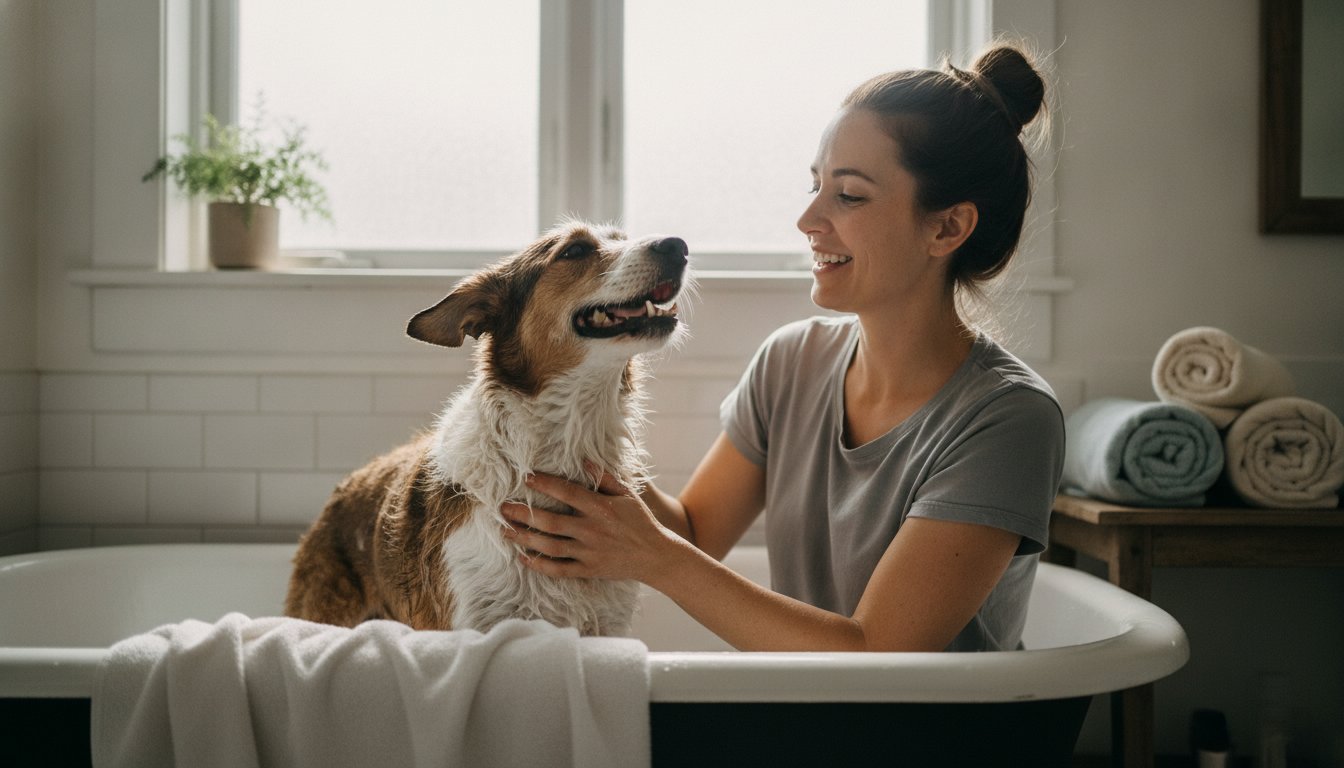
How often should I bathe my dog depends on your dog’s breed, coat type, activity level and skin health.
Bathing frequency isn’t one-size-fits-all, and a too-regular scrub can dry skin while too-infrequent baths can leave odors and mats. Below you’ll find simple rules, a step-by-step bathing routine, and signs that mean you should call the vet.
Always check with your veterinarian before changing your dog’s grooming routine, especially if your dog has skin issues or allergies.
Quick Answer: Most dogs benefit from a bath every 4 to 8 weeks, but short-haired, low-activity dogs can go longer and active, smelly, or oily dogs may need bathing every 2 to 4 weeks. Follow coat-specific guidance and use a gentle, dog-formulated shampoo to avoid drying the skin.
Key Takeaways
- Typical range: every 4 to 8 weeks for most dogs.
- Short-haired, indoor dogs may need baths every 8 weeks; working or smelly dogs every 2 to 4 weeks.
- Use dog shampoo, dry well, and brush regularly between baths to reduce frequency.
In This Guide
How Often Should I Bathe My Dog?
There is no single answer, but aim for every 4 to 8 weeks for most dogs. Adjust for coat type, skin conditions, and lifestyle.
Say your Labrador is a weekend swimmer and hikes in mud, you’ll likely bathe every 2 to 4 weeks. Picture this: your apartment Chihuahua who mostly lounges indoors and never rolls in dirt can probably go 8 weeks or more between baths.
How Does Coat Type Change Frequency?
Coat, not just size, drives how often you bathe your dog.
- Short, Smooth Coats: Every 6 to 8 weeks, unless they get particularly dirty or greasy.
- Double Coats: Every 8 weeks usually, overbathing strips natural oils and can make shedding worse.
- Curly or Dense Coats: Every 4 to 6 weeks to prevent mats and tangles; combine with regular brushing.
- Hairless Breeds: Every 1 to 2 weeks for some, but use a vet-recommended routine to protect sensitive skin.
Signs To Watch For
Watch for these signs that your dog needs a bath or a vet visit.
- Strong, sour or fishy odor that does not go away after brushing.
- Greasy or oily coat that looks dull.
- Visible dirt, mud, or plant debris stuck in the coat.
- Redness, flaking, sores, excessive scratching or rubbing.
- Matted fur that traps dirt and skin oils.
When To Call Your Vet Right Away
- Open sores, severe redness, swelling, or bleeding.
- Sudden, intense itching or behavior change after a bath.
- Any signs of infection like pus or an unpleasant discharge.
How To Bathe Your Dog: Step-By-Step
- Brush First: Remove loose hair and mats to make shampooing easier, 5 to 15 minutes depending on coat.
- Prepare Warm Water: Use lukewarm water, not hot, and a non-slip mat in the tub or sink.
- Wet Thoroughly: Rinse coat completely so shampoo lathers and rinses out; avoid pouring water directly on the face.
- Use Dog Shampoo: Apply a dog-formulated shampoo, using about a tablespoon for a small dog, 2 to 3 tablespoons for medium, and 3 to 6 tablespoons for large/coated breeds.
- Rinse Well: Rinse until water runs clear, which can take 2 to 5 minutes for thick coats.
- Dry Carefully: Towel dry, then use a low-heat dryer at least 6 to 12 inches away, or air dry in a warm room. Brush again once mostly dry.
Say your spaniel loves puddles and you bathe after a muddy hike, focus on rinsing the undercoat well, mud hides close to the skin. Picture this: a terrier shakes furiously after a bath, so towel and clip nails beforehand to control the mess.
Bathing Mistakes To Avoid
- Using human shampoo, which can upset pH balance and dry skin.
- Bathing too often, more than once a week, unless recommended by your vet.
- Not brushing before bathing, which worsens mats and tangles.
- Skipping ear protection, which can lead to infections, place a cotton ball gently in each ear if your dog tolerates it.
Sample Bathing Schedule
Use this simple table to match common situations to how often you should bathe.
| Situation | Typical Frequency | What To Do |
|---|---|---|
| Indoor, short-haired dog | Every 6 to 8 weeks | Brush weekly, spot clean paws between baths |
| Active, outdoor dog (mud, swimming) | Every 2 to 4 weeks | Rinse after heavy outdoor play, use deodorizing shampoo if needed |
| Double-coated or shedding breed | Every 8 weeks | Brush during shedding season; avoid frequent baths |
| Dogs with skin conditions (vet-guided) | As directed by vet, often 1–2 weeks with medicated shampoo | Follow veterinary instructions exactly |
Between baths, simple hygiene helps: wipe paws after walks, use a damp cloth on smelly areas, and brush to distribute natural oils. If you want a summer refresher for your pup after watermelon snacks, check safe treat tips like how dogs can eat watermelon safely, which pairs well with warm-weather bath schedules.
Also consider grooming and bonding benefits. If your dog licks you more when wet or after a bath, you might find useful context in why dogs lick and how to respond calmly.
Frequently Asked Questions
Can I Bathe My Puppy More Often Than An Adult Dog?
Yes, but keep it gentle and rare, about every 3 to 4 weeks for messy puppies, using puppy-formulated shampoo and warm water; avoid overbathing to protect their developing skin.
Is It Okay To Use Human Shampoos On My Dog?
No, human shampoos can upset a dog’s skin pH and cause dryness or irritation; always use products labeled for dogs or vet-recommended formulas.
Can I Use Dry Shampoo Or Waterless Shampoo Between Baths?
Yes, waterless shampoos and wipes are safe for spot cleaning and deodorizing between baths, used no more than once a week in place of a full bath.
Will Bathing Reduce Shedding?
Partly, yes; regular brushing reduces loose hair, and occasional baths can loosen dead undercoat, but overbathing may increase dry shedding, stick to the recommended schedule for your coat type.
Can I Bathe My Dog If They Have Fleas?
Yes, but treat fleas with a vet-approved flea treatment; a medicated bath can help remove fleas, but it must be paired with a full flea control plan to prevent reinfestation.
How Long Should A Bath Session Last?
About 10 to 30 minutes from brush to dry for most dogs; thick or matted coats may take longer, so break the process into stages if your dog gets anxious.
Small Steps Make Grooming Easier
Start with brushing and short, positive baths so your dog learns that grooming means treats and praise, not punishment. Adjust the plan above for your dog’s comfort, and talk to your vet if skin problems or odor persist.
This article is for general information only and is not a substitute for professional veterinary advice.